
ERCP
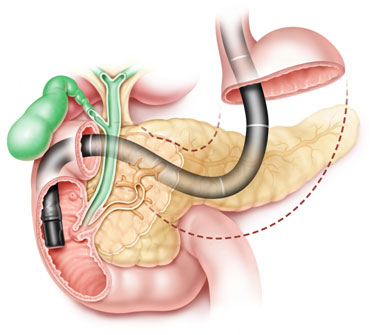
ERCP (Endoscopic Retrograde Cholangiopancreatography)
ERCP is a specialized procedure that combines endoscopy and fluoroscopy to diagnose and treat problems of the bile ducts, pancreatic ducts, and gallbladder. It is often used when less invasive tests like MRI or CT scans suggest abnormalities that may need direct treatment or sampling.
Symptoms That May Lead to ERCP
Patients may be referred for ERCP when experiencing the following symptoms, which can indicate bile or pancreatic duct issues:
Jaundice (yellowing of the skin and eyes)
Abdominal pain, particularly in the upper right quadrant or central abdomen
Unexplained weight loss
Nausea or vomiting
Dark urine or pale stools
Itching (due to bile salt accumulation)
Fever or chills, especially if related to cholangitis (bile duct infection)
History of gallstones, pancreatitis, or suspected tumors
Course of the Procedure
Preparation:
Patients are typically asked to fast for at least 6–8 hours before the procedure.
Blood tests may be done to assess liver function and clotting ability.
Sedation:
ERCP is usually performed under sedation or general anesthesia.
Procedure Steps:
A flexible endoscope (a long, thin tube with a camera) is passed through the mouth, esophagus, and stomach into the first part of the small intestine (duodenum).
A catheter is inserted through the endoscope into the opening of the bile and pancreatic ducts (ampulla of Vater).
A contrast dye is injected, and X-rays are taken to visualize the ducts.
Depending on the findings, treatments may be performed during the same session:
Stone removal
Stent placement (to open narrowed ducts)
Biopsy or brushings (for suspected tumors)
Dilation of strictures
Duration:
The procedure usually takes between 30 minutes to 1 hour, depending on complexity.
Recovery
Post-procedure Monitoring:
After ERCP, patients are observed in a recovery area until the sedation wears off.
Most people can go home the same day unless complications arise or hospital admission is planned.
Common After-effects:
Mild sore throat, bloating, or gas due to air introduced during the procedure.
Temporary nausea from the sedatives.
Complications (uncommon but possible):
Pancreatitis (most common serious complication)
Infection (cholangitis)
Bleeding
Perforation (tear in the digestive tract)
Aftercare and Follow-Up
Diet:
You may be advised to avoid heavy meals for a few hours after the procedure.
Clear fluids are usually recommended initially, followed by a gradual return to a normal diet.
Medications:
If stents were placed or infections treated, you may be prescribed antibiotics or pain relievers.
Avoid NSAIDs unless your doctor says otherwise (to reduce pancreatitis risk).
Activity:
Avoid driving or operating machinery for 24 hours due to sedative effects.
Resume normal activities the next day if you feel well.
Follow-up:
Further treatment may be planned based on biopsy results or findings during the ERCP.
If a temporary stent was placed, a follow-up ERCP in Pune may be scheduled to remove or replace it.
When to Seek Help:
Severe abdominal pain
Fever over 101°F (38.5°C)
Persistent vomiting
Bleeding (vomiting blood or black stools)